

At a Glance
Stage: In Remission
Location: Ohio
Age Now: 17
Age at Onset: 11
Primary Symptoms: Motor and Vocal Tics • Severe OCD • Separation Anxiety • ADHD-like Symptoms • Slurred Speech • Cognitive Decline • Neuropsychiatric Changes
Triggers: Strep Infection • Mycoplasma • Bartonella
Treatments Tried: Antibiotics. •. High Dose IVIG • Steriods
Current Approach: Ongoing management of occasional flares
One day in 2020 during quarantine, I was playing fortnite. I think it is fair to say, that is what most of us were doing during that time. There was nothing special about that day. I would have never thought, “I will be talking about this day 6 years later in speech class.” I was playing with my dad and my sister, when my dad noticed something, my neck kept jerking. To be honest, I don't even know if I realized I was doing it. But he was concerned by it, enough that he called my mom and convinced her that she needed to leave work. When she came home, her concern grew too. The neck jerking continued over the course of a couple days, then other motor tics appeared, and then vocal tics. My parents decided it was time to take me to the doctor. My pediatrician was quick to diagnose me with Tourette's syndrome and recommended various medications to suppress the symptoms. If that was the end of the story, this speech would focus simply on research regarding tic disorders. However, that is not where my story ends, because over the next several days, everything about me began to change.
My tics worsened and I developed extreme OCD, unusual separation anxiety, ADHD, slurred words, and symptoms of a term that doctors loved to mention, psychosis. It is simple to explain all of the medical terminology for what I had, but the feeling I find hardest to explain is this, I didn't necessarily understand that I was changing. I didn't wake up one morning and think, “something has happened to my brain.” That is primarily because I was experiencing the world through that brain. To everyone around me, it was as if I had become a different person. To me, it was simply my reality.
Research wise, this phrase of “overnight change” or “woke up as a different person” holds weight. This was a typical way people described this, because years before this happened to me, other children had faced experiences remarkably similar. Researchers dove into the abrupt and dramatic onset of OCD symptoms, tics, anxiety, and behavioral changes. In some of these cases, though, the symptoms weren't the only common ground. There was another connection, strep throat. The condition became referred to as PANDAS, standing for Pediatric Autoimmune Neuropsychiatric disorder associated with Streptococcal infections. According to MedLink Neurology, PANDAS can be diagnosed when “Obsessive compulsive disorder and/or tic disorders suddenly appear following a strep infection” (2019). When this generalization was made, researchers were challenged. One question of many that was hard for them to answer was “How could bacteria in someone’s throat have anything to do with what happens inside their brain?” The answer they discovered was harder to understand, it was the immune system, one of the systems that is supposed to protect us. When our bodies attack bacteria like strep, the immune system produces antibodies to help identify and attack it. In the case of PANDAS, strep bacteria hides itself by putting molecules on its cell wall to look like molecules found on the heart, joints, and brain tissue. However, according to MedLink Neurology, “the molecules on the strep bacteria are eventually recognized as foreign to the body, and the child's immune system reacts to them by producing antibodies. Because of the molecular mimicry by the bacteria, the immune system reacts not only to the strep molecules, but also to the human host molecules that were mimicked; antibodies systems ‘attack’ the mimicked molecules in the child's own tissues” (2019). In simple terms, the immune system's attempt at attacking strep turns into an attack on the brain.
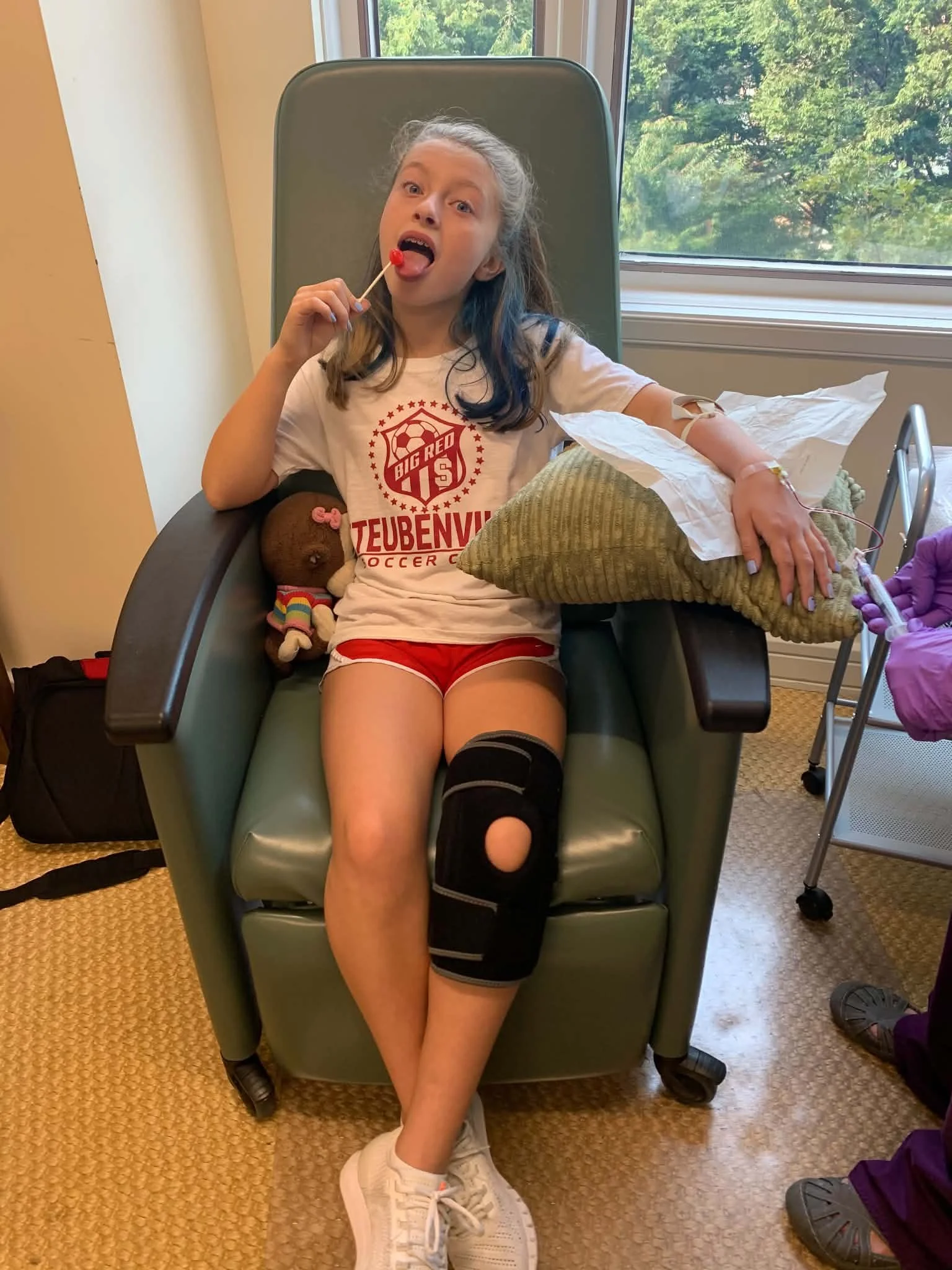
Now, imagine being a child living inside of these scientific questions, because while researchers use phrases like “acute-onset” of symptoms, families are facing things that are indescribable. What doctors referred to as “motor abnormalities” was my body moving when I never told it to move. “OCD” wasn’t just wanting things to be neat, it was being unable to function because the desks in my classroom weren't positioned correctly, and there weren't enough people sitting on the left side of my table. When school started that august, I couldn't make it through the day. I would email my mom everyday from my school laptop with jumbled words complaining that everything was triggering me. Numbers became confusing and things that my brain had once done automatically, suddenly felt impossible. A sensation I remember specifically from that time is one I've always struggled to describe, it felt like I was faking my abnormal actions, even though I knew I wasn't. It was as if one part of my brain was watching my body behave in a way I didn't want it to behave while another part of my brain was refusing to let me stop. It felt surreal to me that my own body was betraying me. As my symptoms became so severe, I was led back to the doctor. That is when PANDAS was introduced to my family by my pediatrician’s nurse practitioner. Blood work showed evidence that fit with a recent strep infection, and my symptoms aligned with the patterns that doctors were associating with PANDAS. It was relieving to finally put a name to what was happening to me, but this didn't mean everything suddenly became easy. This is because PANDAS exists in a complicated area of the medical world.
Even today, PANDAS is constantly referred to as controversial. Some doctors do not believe it truly exists because there is not a dedicated test for diagnosis, it is more of a combination of symptoms. Some doctors felt like there were too many unanswered questions and missing research regarding this disorder to accept it as a complete diagnosis.
This created major uncertainty for my family in 2020, especially because there was a lot less research on this disorder then. We weren’t observing a medical controversy from the outside, we were living inside of it. At one point, we went to a neurologist in Pittsburgh still searching for answers, in front of me, they told my parents I was experiencing childhood tics and psychosis. At that time in my life, my brain was obviously not very high functioning, but I knew this lady was calling me psycho, and that stung. Similar to that moment, there were times where I would feel like I was snapping back into my normal self. And during those moments, I faced major confusion. Why was everyone looking at me differently? Why were my friends treating me differently? Why couldn’t I just go to school like everyone else? But I didn’t have enough time and ability to communicate these questions before my symptoms would overwhelm me again. Eventually, my family found a doctor in Washington D.C. who specialized in treating children with PANDAS, Dr. Latimer. By the time we found her, we were desperate. I was emotionally, mentally, and physically in pain. I remember when I met my doctor for the first time, she asked me to draw a clock, but I couldn't. I want to take a step back and think about that for a moment. Every single thing you are using right now to understand me, your brain is responsible for. Language, movement, memory, attention, emotion. We experience these abilities so effortlessly that it is rare we stop to think about them. That is until they stop feeling effortless. Dr. Latimer decided that antibiotics, steroids, and IVIG would be the extent of my treatment.
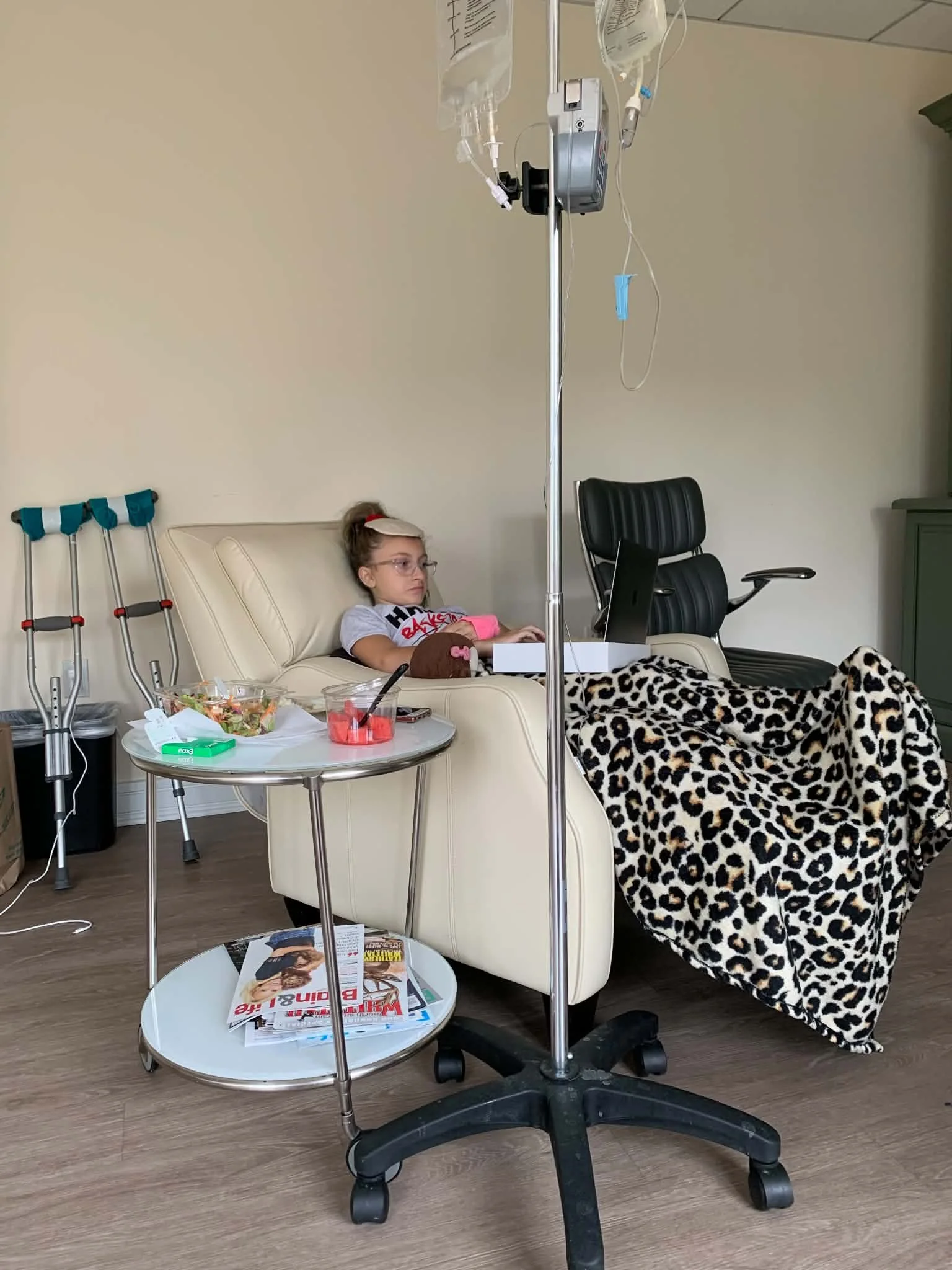
According to cleveland clinic, IVIG “is made with collected antibodies from healthy donors. It’s similar to receiving a blood transfusion from donated blood. But instead of receiving blood, you’ll get antibodies to help strengthen your immune system’s natural defenses” (2024).
What this treatment did was provide me with antibodies that would no longer attack my brain, and would instead fight strep and future infections. After receiving IVIG and continuing treatment, I began to get better. The results of my treatment, however, are where my story and research need to be separated. My individual response cannot prove that this same reaction will happen for every other PANDAS patient. There was a study done that included “30 males and 25 females, and the average age of onset was 8.9 years old. Those patients were all given IVIG treatment of 2 g/kg per day for two consecutive days. The study found a noticeable improvement in symptoms [...] for at least one year for 85% of the patients. [...] (21.8%) went from having extreme symptoms to having no symptoms, [...] (40%) went from having extreme symptoms to having mild symptoms, (20%), only one treatment of IVIG was required, and (65.5%) required a second course of treatment. In 15% of cases, patients had a reappearance of symptoms within 1 to 6 months after treatment. In those cases, a third round was attempted a year after the first but did not result in significant improvement” (Pohlman, 2020). The effectiveness of this treatment varies on the patient and how soon they were able to get diagnosed with PANDAS and begin treatment. This study does not mention the percentage of patients who have unfortunately taken their lives due to this disorder.
By October, I was finally able to return to school. I have experienced flare ups since then but I have continued to improve over time. I research PANDAS a lot because I cannot rely on my memory to teach me everything I want to know about this disorder. My brain was so inflamed that a lot of my knowledge of this experience relies on stories my mom has told me or research I have done. I can stand here and tell you my story and the research I have done but what I want to leave you with is a lesson I have found to be the most important: understanding what is happening inside someone's mind requires us to look beyond the mind itself. Physical health and mental health are not in separate categories. I want to teach people that biology is sometimes overlooked and can be a reason why people with “mental illness” don't improve with treatment. There are still a lot of unanswered questions about PANDAS, but they are not a reason to stop looking, they are the reason research matters.

References
https://www.nimh.nih.gov/. (2017). PANDAS | handouts | MedLink neurology. MedLink Neurology. https://www.medlink.com/handouts/pandas
National Institute of Mental Health. (2019). NIMH » pandas—Questions and answers. Www.Nimh.Nih.Gov. https://www.nimh.nih.gov/health/publications/pandas
Pohlman, D. (2020, October 11). IVIG treatment reduces symptom severity in pandas/pans. PANDAS Network. https://pandasnetwork.org/research/archive/latest-research/intravenous-immunoglobulin-treatment/
Cleveland Clinic. (2024, October 2). IVIG (intravenous immunoglobulin). https://my.clevelandclinic.org/health/treatments/ivig-intravenous-immunoglobulin
-Written by Jolee for her High School Speech Class